From first note to favorite song.
Show your child—or yourself—exactly how music unfolds. As families gather this Thanksgiving weekend looking ahead to the new year, start with a real trial lesson, a dedicated teacher, and a clear picture of what comes after the first month, the first term, and the first song you can actually play.
Book a trial lesson for January
The holiday break is the calmest time to tour the studio, meet the teacher, and try the keys or strings. Your slot for the January term is held with no upfront term commitment.
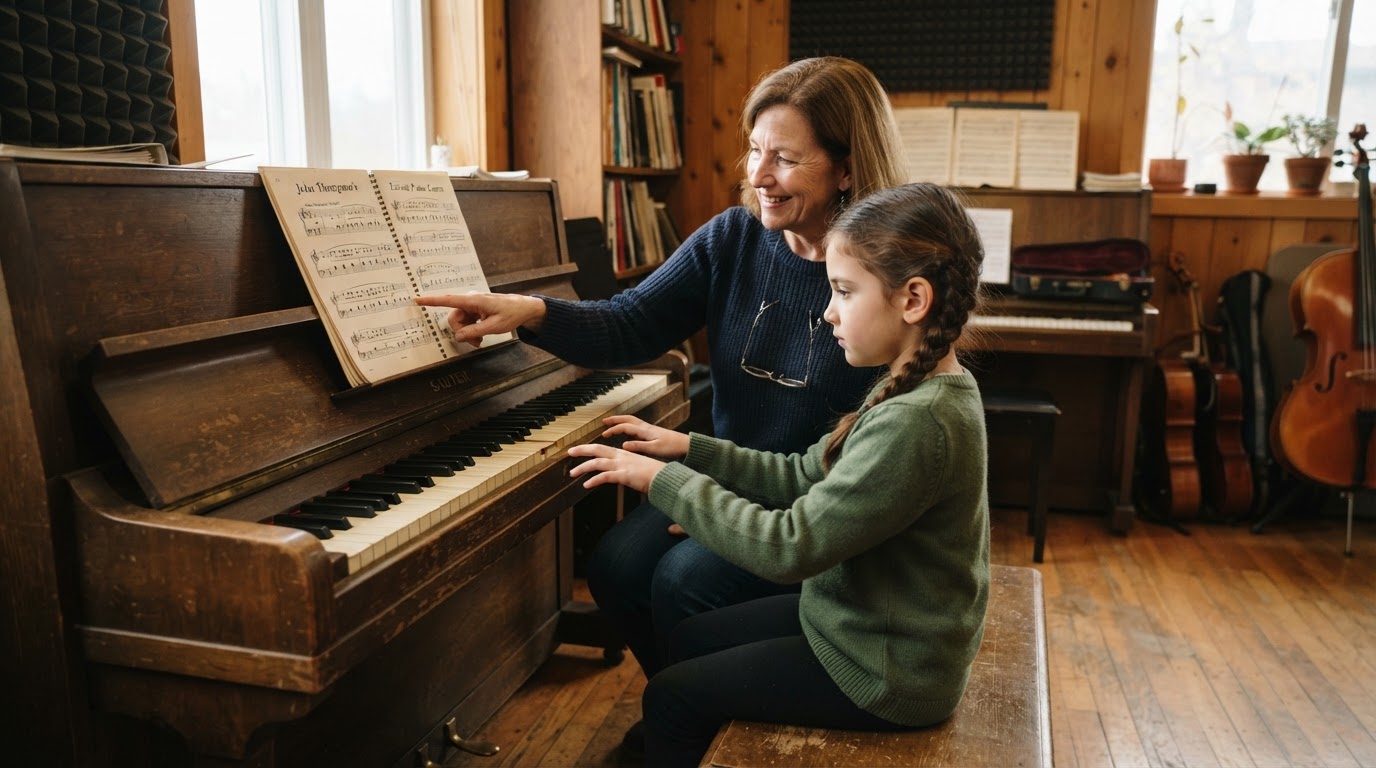
Where learning feels like a path, not a leap.
Quiet focus, personal pacing, and music taken seriously.
Find the right starting point for your hands and ears.
Every instrument has its own tactile personality. We guide you honestly toward the one that matches your goals, natural posture, and the music you actually love listening to.
Piano
Foundation & RepertoireBest for beginners of any age seeking clear visual note relationships; a first term builds posture, staff reading, and two-hand independence on real melodies.
Guitar
Acoustic & ClassicalFits learners eager to accompany themselves or understand chord charts; a first term focuses on clean finger placement, steady strum patterns, and open-position songs.
Violin
Tone & Ear TrainingSuits focused students drawn to expressive melody; a first term centers on comfortable bow hold, pitch accuracy, and clean tone production on open and stopped strings.
Voice
Breath & ArticulationDesigned for singers wanting sustainable technique without strain; a first term addresses diaphragmatic breath support, vocal resonance, and confident pitch matching.
How a beginner becomes a musician, one milestone at a time.
Most people drop lessons when they can't visualize what comes next. At Crescendo, every lesson ties directly to an audible, real-world skill you can hear in your living room.
Reading Music & Playing Simple Pieces
What you can do:
"Can read treble and bass landmark notes, count quarter and half note beats reliably, and play 3-4 short musical phrases without second-guessing finger placement."
- Ergonomic instrument posture & hand relaxation
- Translating sheet music symbols into immediate touch
- Basic rhythm pulse and steady counting aloud
Technique, Rhythm, & A First Full Song
What you can do:
"Can perform a complete beginner-to-early-intermediate song with expressive dynamic phrasing, steady pulse, and accurate fingering from memory or notation."
- Dynamic control (piano, forte, crescendos)
- Two-hand independence or clean pick/bow articulation
- Self-correction: recognizing errors by ear without stopping
Reading Fluently & Playing with Others
What you can do:
"Can pick up fresh sheet music and sight-read the melody independently, harmonize or hold their part alongside another musician or backing track."
- Advanced interval reading and scale theory in keys
- Playing in duets, ensemble accompaniment, and steady groove
- Developing a distinct personal tone and expressive touch
Student-Chosen Repertoire & Optional Exams
What you can do:
"Can select complex songs they genuinely love (classical, jazz, pop, or cinema), prepare for formal conservatory exams if desired, or play for family recitals."
- Student-curated repertoire and personal artistic voice
- Audition or formal exam preparation (ABRSM/RCM formats)
- Lifelong autonomy: knowing how to learn new songs on your own
Ready to take the very first step?
A trial lesson lets the teacher evaluate hand span, natural rhythm, and ear sensitivity to set realistic milestones for stage 1.
What a trial lesson actually looks like.
Music studios often treat trials like hard sales pitches. We treat it as an open consultation and a real, productive first music lesson.
No Sales Pitch, No Same-Day Pressure
You will never be asked to sign a term contract or hand over a credit card deposit while standing in the hallway. Go home, talk it over as a family, and decide.
Honest Level & Instrument Advice
If your child is physically not quite ready for violin or would flourish faster starting with piano first, the teacher will tell you directly and transparently.
Your 30-Minute Trial Lesson Itinerary
Warm Introduction & Getting Settled
The teacher welcomes the student and parent into the studio, removes any nervousness, and asks about favorite musical styles, listening habits, and goals.
Hands-on Instrument Exploration
We place hands on keys or strings immediately. We test posture, natural finger curl, motor coordination, and simple pulse without requiring any prior theory.
Playing a First Melody Together
Before the 30 minutes conclude, the student plays their very first responsive musical phrase as a duet alongside the teacher's grounding accompaniment.
Honest Evaluation & Next Steps
The teacher provides an unhurried, candid recommendation regarding readiness, instrument fit, lesson length, and practice pacing. Zero pressure to commit on the spot.
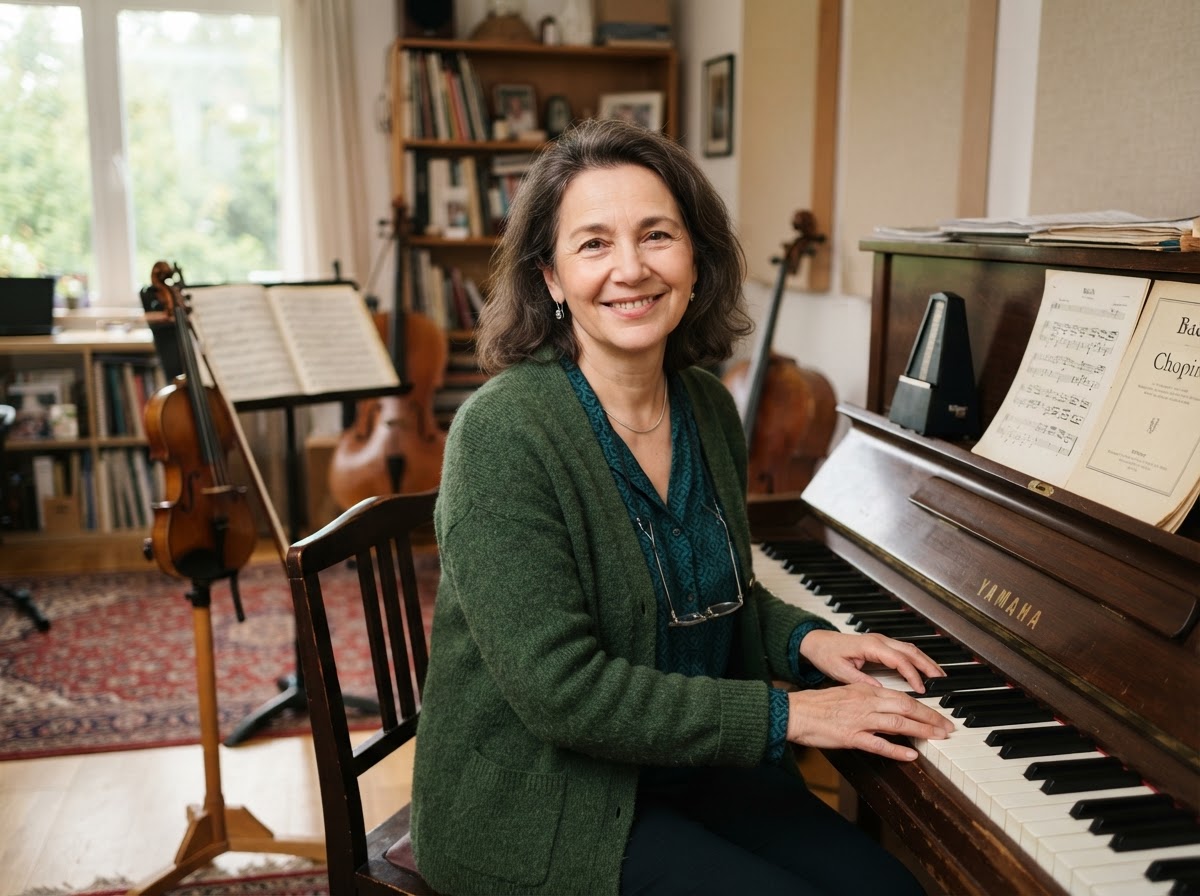
Elena Vance, M.Mus [Placeholder]
Studio Director & Principal Instructor
Patient instruction from a teacher who takes your goals seriously.
Music instruction should never be an intimidating gauntlet of reprimands. At Crescendo, teaching is rooted in genuine enthusiasm, anatomical comfort at the instrument, and steady psychological encouragement.
With a classical conservatory foundation and over a decade of community studio mentoring, Elena works with students who are picking up an instrument for the first time as well as adults returning after a decades-long pause.
Master of Music in Performance & Pedagogy [Placeholder credential]
Formal conservatory training with emphasis on child motor development and Suzuki/Traditional hybrid methods.
"Technique serves the song, not the ego"
We choose real, recognizable songs early so practice at home feels like making music, not just doing repetitive drills.
How lessons work week to week.
Clear expectations keep students encouraged. Here is the framework we recommend for sustainable musical growth.
In-Person & Online
Most students attend in person at our acoustic studio room. Live online video lessons are available for inclement weather or travel weeks.
Lesson Lengths [Placeholders]
30 minutes for beginners ages 6–10; 45 minutes for intermediate students and teens; 60 minutes for advanced repertoire or adult deep-dives.
Practice Expectations [Placeholders]
15 to 20 minutes, 4–5 days per week outperforms one long 2-hour panic session before lesson day. We provide structured weekly assignment notebooks.
How pricing works.
Tuition is calculated based on lesson length (30, 45, or 60 minutes) and billed by the term or monthly installment. There are no registration markups or hidden recital admission fees.
"You pay the trial lesson only after you have had it. The term rate is shown to you before you commit."
$35 [Placeholder]
Paid only after the lesson. Includes personalized evaluation report.
$140/mo [Placeholder]
Four lessons per month. Ideal for children & beginners starting Stage 1.
$195/mo [Placeholder]
Four lessons per month. Recommended for intermediate learners & adults.
*All figures shown are illustrative placeholders until the studio teacher establishes official semester rates.
Frequently Asked Questions
Honest answers to the questions parents and adult beginners ask us most.
For piano and violin, children typically start comfortably around age 6, when hand dexterity and focused attention span reach 20–30 minutes. Guitar and voice work best starting around age 8 to 10 as vocal cords mature and hand span widens. In a trial lesson, we evaluate physical readiness before recommending you begin.
Book a Trial Lesson
Reserve your 30-minute private trial. Meet the teacher, explore the instrument, and leave with an honest assessment and zero sales pressure.